

Plano and the rest of North Texas don't get rain often, but when it comes, it tends to come all at once. A spring or fall storm can drop two or three inches in an afternoon, and every drop that lands on your roof has to go somewhere. Your gutters and downspouts decide where — and when they're clogged, that water goes everywhere you don't want it.
Here's what clogged gutters actually affect, why it matters more on a Plano home than you might think, and what to check before the next big storm.
How Much Water Your Gutters Handle
It's easy to underestimate. One inch of rain on 1,000 square feet of roof is roughly 620 gallons of water. A typical 2,500-square-foot roof in a two-inch storm sends more than 3,000 gallons through the gutters and downspouts, much of it in a short burst.

Clean gutters move that water to a few controlled exits away from the house. Clogged gutters let it spill over wherever it can.
What Clogged Gutters Do to Your Roof
The roof edge is where clogged gutters do their quietest damage.
When a gutter fills with leaves and debris, water backs up and spills over the back edge of the gutter — between the gutter and the house. From there it runs down the fascia board (the trim board the gutter is attached to) and into the soffit underneath. Standing water in a full gutter can also wick back up under the bottom row of shingles.
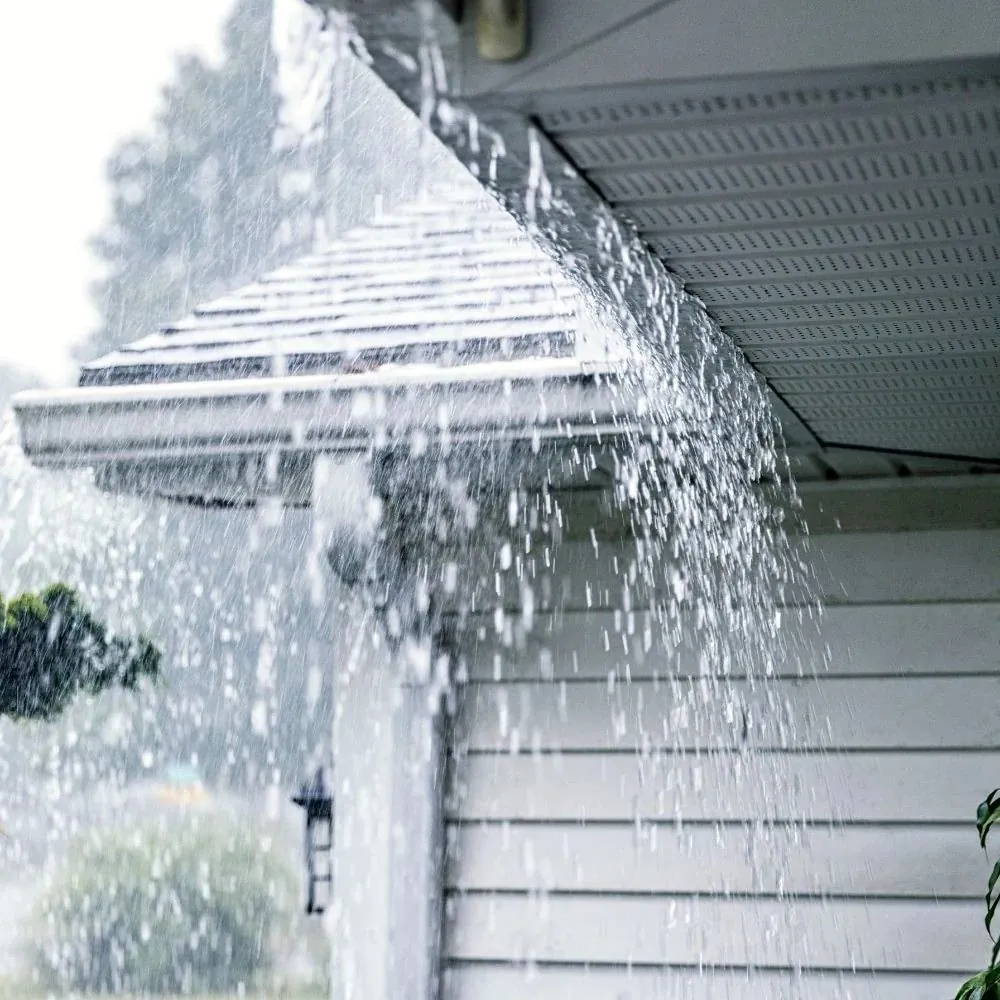
Over time, that repeated soaking can:
- Rot the fascia and soffit. Wet wood softens, and once the fascia goes, it can't hold the gutter securely.
- Damage the roof decking at the edge. The plywood or decking along the eave can soften and deteriorate where water keeps getting in.
- Pull the gutters loose. A gutter full of wet debris and water is heavy. Combined with softening fascia, gutters can sag or pull away from the house.
- Wear out lower roof sections faster. If an upper-story downspout empties onto a lower roof, a clog upstream can send concentrated overflow onto the same few shingles every storm.
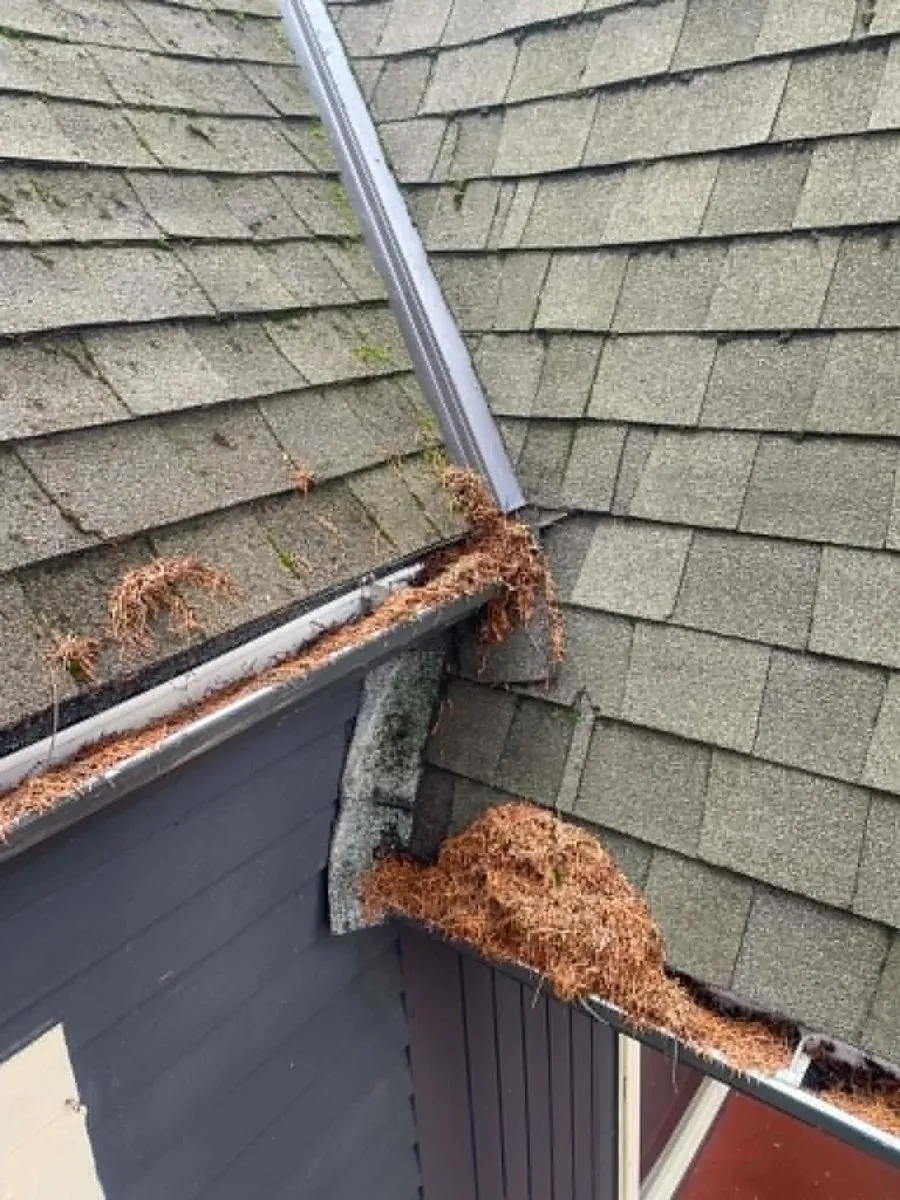
None of this shows up overnight, which is why it's easy to miss. It usually appears as peeling paint on the fascia, dark streaks behind the gutters, or a gutter that's started to sag.
What Clogged Downspouts Do to Your Foundation
This is the big one for Plano homes.
Much of the DFW area — from Plano and Allen to Wylie and Garland — sits on expansive clay soil. It swells when it gets wet and shrinks as it dries out. When a downspout is clogged, or empties right next to the house, roof water soaks the soil along one section of the foundation while the rest stays dry. That uneven swelling and shrinking is one of the main drivers of the foundation movement that leads to cracked slabs, sticking doors, and drywall cracks.
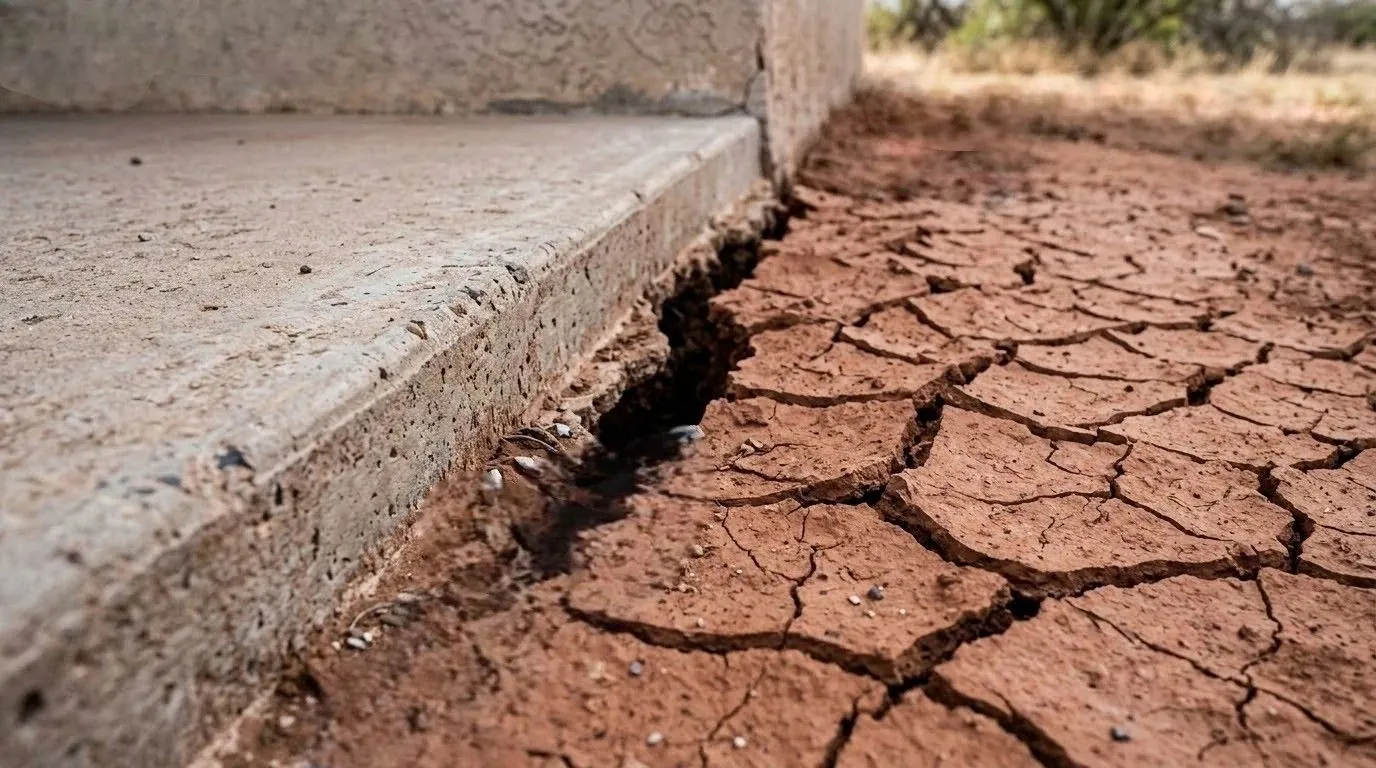
Building codes generally call for downspouts to discharge at least five feet from the foundation. On Plano's clay soil, six to ten feet is a safer target. If your downspouts empty right at the base of the wall, a simple extension or splash block can make a real difference.
What's in Your Gutters Can Tell You About Your Roof
When you clean your gutters, take a look at what comes out. If you find a lot of dark, sand-like grit, those are granules from your asphalt shingles.
- A small amount is normal, especially on a newer roof.
- A sudden heavy amount after a storm can be a sign of hail damage.
- More every year without any major storms usually means the shingles are aging and losing their protective layer.
Either of the last two is a good reason to have the roof looked at. Granule loss exposes the asphalt underneath to UV and weather, which speeds up wear. If you're dealing with hail damage, our post on impact-resistant shingles vs. standard shingles covers what to consider if a replacement is on the table.
What to Check Before Heavy Rain
A quick walk around the house — and a look into the gutters if you can do it safely — covers most of it:
- Clear the gutters of leaves, twigs, seed pods, and granule buildup.
- Check that downspouts flow freely. Run a garden hose into the gutter and make sure water comes out the bottom at full flow.
- Make sure downspouts discharge away from the house — ideally six feet or more on clay soil.
- Look for sagging sections, gaps at the seams, or gutters pulling away from the fascia.
- Check the fascia and soffit for peeling paint, staining, or soft spots.
- Watch the gutters during the next rain. Water spilling over the front or back edge points to a clog or a slope problem.
How often? Most homes need cleaning at least twice a year — in spring after the trees shed, and in late fall after the leaves drop. Homes with large oaks or pecans overhead may need it more often.
Know When to Call a Professional
Gutter cleaning means ladder work at the roof edge, and every year people get hurt doing it. If your home is two stories, the roof is steep, or you're not comfortable on a ladder, there are local gutter cleaning services that handle it routinely and don't cost much compared to the damage they help prevent.
Where Concord comes in is when the cleaning turns up something more: gutters that are damaged, sagging, or pulling loose, rotted fascia, or signs that the roof itself needs attention. We handle gutter repair and replacement as part of our storm restoration and residential roofing work, and we can inspect the roof edge, decking, and shingles while we're there.