You’ve decided it’s time to replace the old fence around your yard, or to put up a fence for the first time. There are more combinations of fence styles and materials than we could ever list here, so let’s break down some of the most common ones to give you an idea of what’s out there and help you choose what works, and looks, best for you.
Privacy Fence Styles
Privacy fences are the most common fences in North Texas backyards. The way the boards are arranged makes a big difference in how private, and how sturdy, the fence ends up.
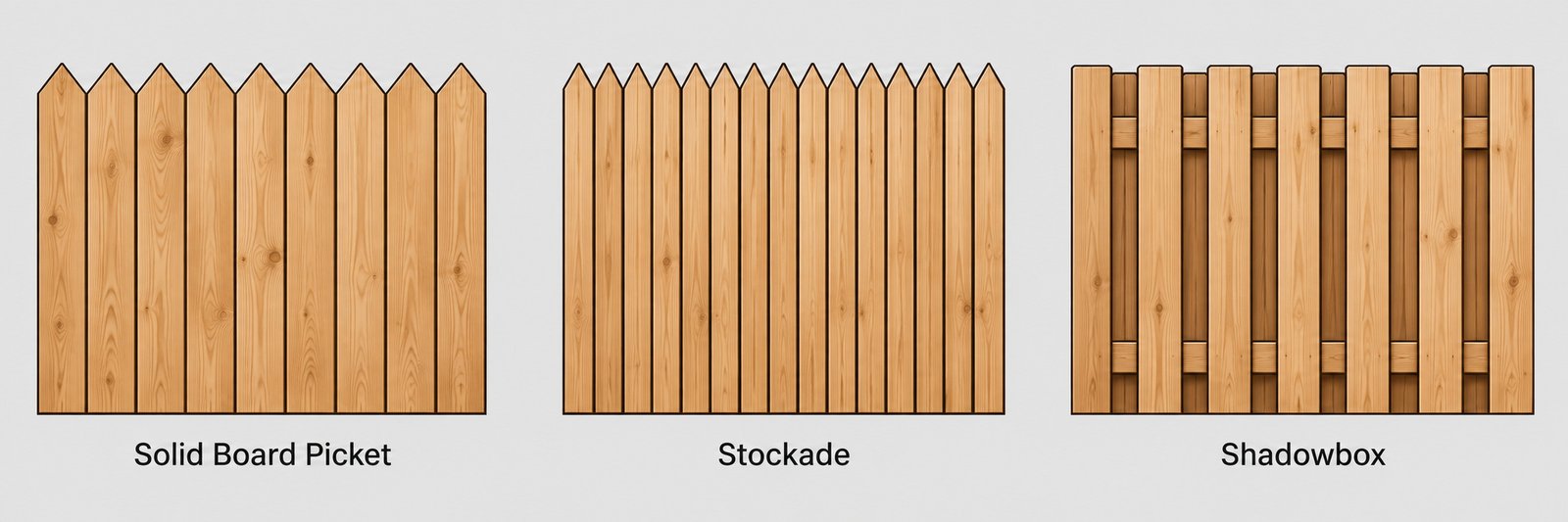
- Solid Board Picket: wide boards installed edge to edge in a single row. It’s the standard, budget-friendly privacy fence. As the wood dries and shrinks, small gaps can open between the boards over time.
- Stockade: narrower boards set tightly side by side with pointed tops, for a classic, rustic look. It offers good privacy, and the pointed tops give it a more traditional feel.
- Shadowbox: boards alternate between the front and back of the rails. It looks solid from straight on, but air passes through the gaps, which helps the fence handle wind, and both neighbors see a finished side. The trade-off is that you can see through it at an angle.
Another popular privacy option is board-on-board, where boards overlap each other by about half an inch to an inch. That overlap keeps the fence gap-free even after the wood shrinks, so it’s a top pick when full privacy matters most.
Picket Top Styles
The shape of the top of each board, called the picket top, has a big effect on the look of a fence. The same top styles are used on open picket fences and on solid privacy fences.
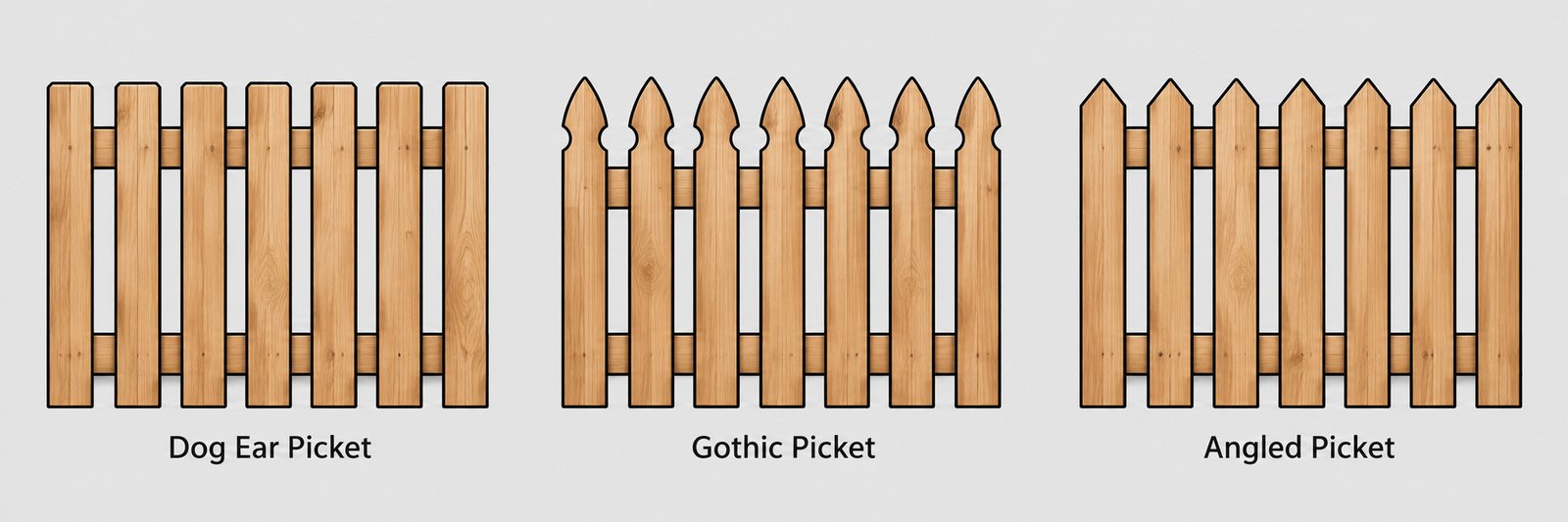
- Dog Ear: the top corners are clipped at an angle. It’s simple and clean, and it’s the most common top on privacy fences in the area.
- Gothic: a pointed, arched top with a decorative notch below it, for a more traditional, ornamental look.
- Angled: a simple pointed peak. It’s a classic picket-fence look that works on both short and tall fences.
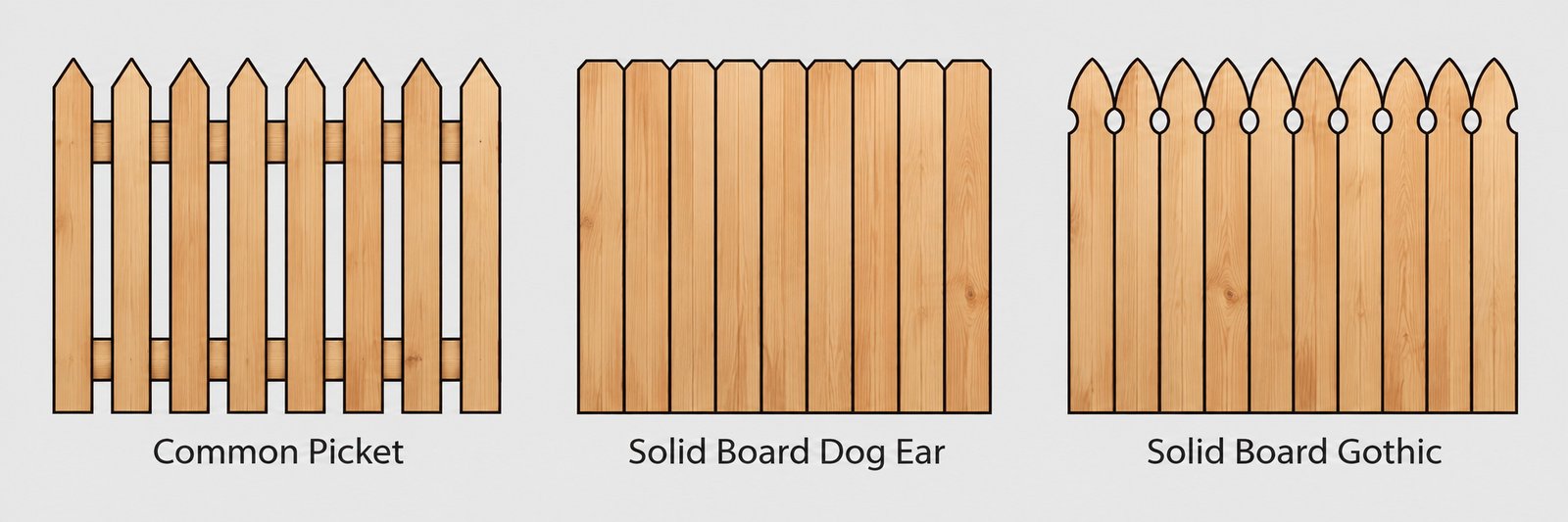
A common picket fence spaces the boards apart. It’s decorative more than private, and a good fit for front yards and gardens. Put those same tops on boards installed tight together and you get a solid board privacy fence, like solid board dog ear or solid board gothic, with the same style but full coverage.
Framed, Arched & Scalloped Fences
You can also change the shape of the fence line itself, not just the board tops.
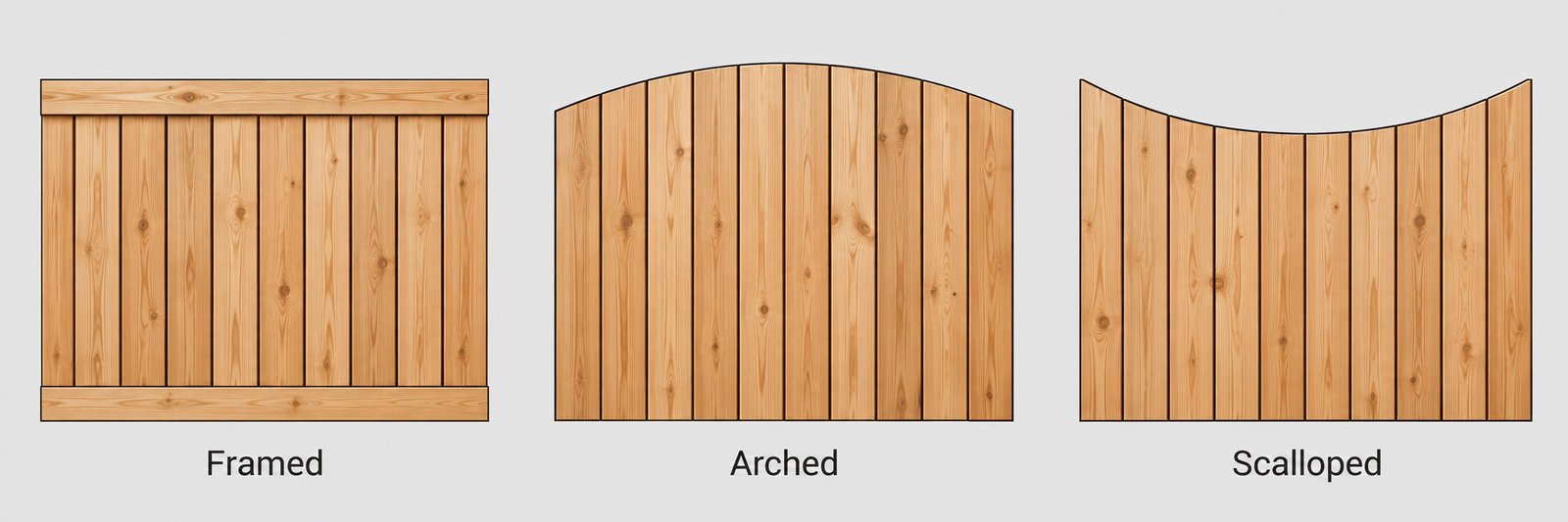
- Framed: trim boards run across the top and bottom, framing each section like a panel. The top trim gives the fence a finished, upscale look and helps shed water off the board ends, while the bottom board keeps the pickets off the ground.
- Arched: each section curves upward between posts. A softer, more decorative look that’s popular for gates and front-facing sections.
- Scalloped: each section dips down between posts. Often used where you want a little more openness or a decorative accent.
Horizontal Fences
Horizontal fences run the boards side to side instead of up and down, for a clean, modern look that has become very popular around DFW. Long horizontal boards need solid support to stay straight, so many are built with steel framing.
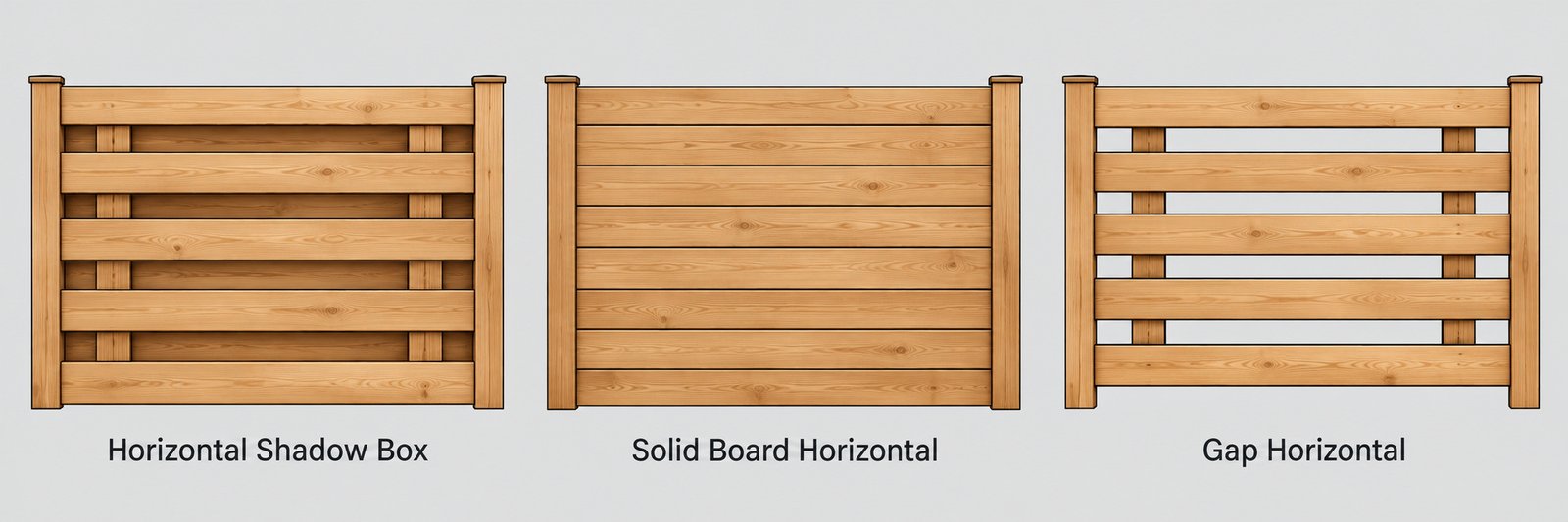
- Horizontal Shadow Box: boards alternate between the front and back, like a vertical shadowbox turned on its side, for airflow and a finished look on both sides.
- Solid Board Horizontal: boards stacked tight for full privacy and a sleek, modern wall of wood.
- Gap Horizontal: boards spaced apart for a lighter, more open look, better for defining a space than for privacy.
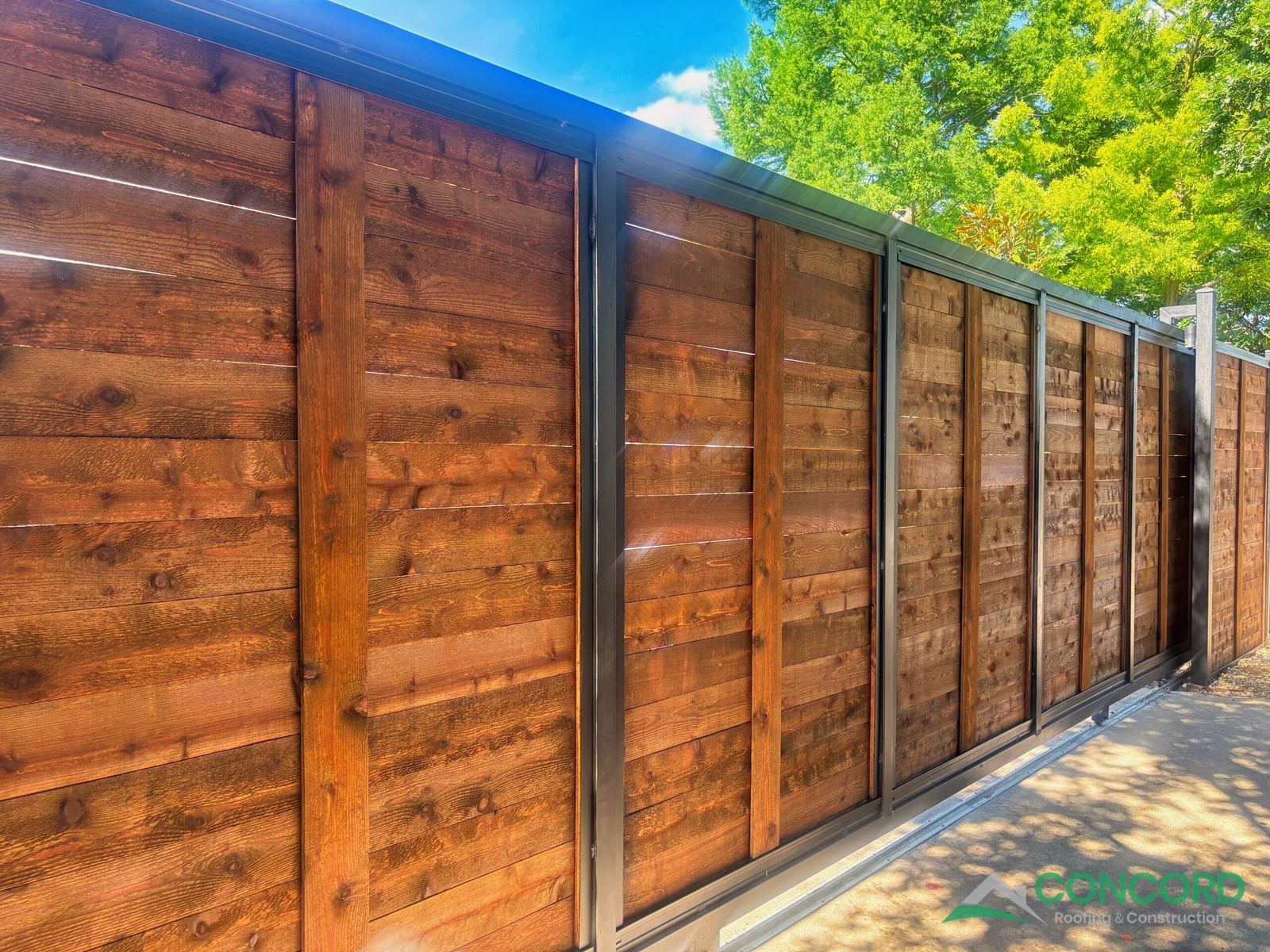
For a real example, see the finished fence from our Plano horizontal fence and automatic gate project: stained horizontal boards in a black steel frame, with an automatic sliding gate.
Estate (Ranch) Rail Fences
Estate rail fences, also called ranch rail or post-and-rail fences, use only posts and horizontal rails. They mark a boundary without blocking the view, which makes them popular for larger lots, front yards, and properties with open space.
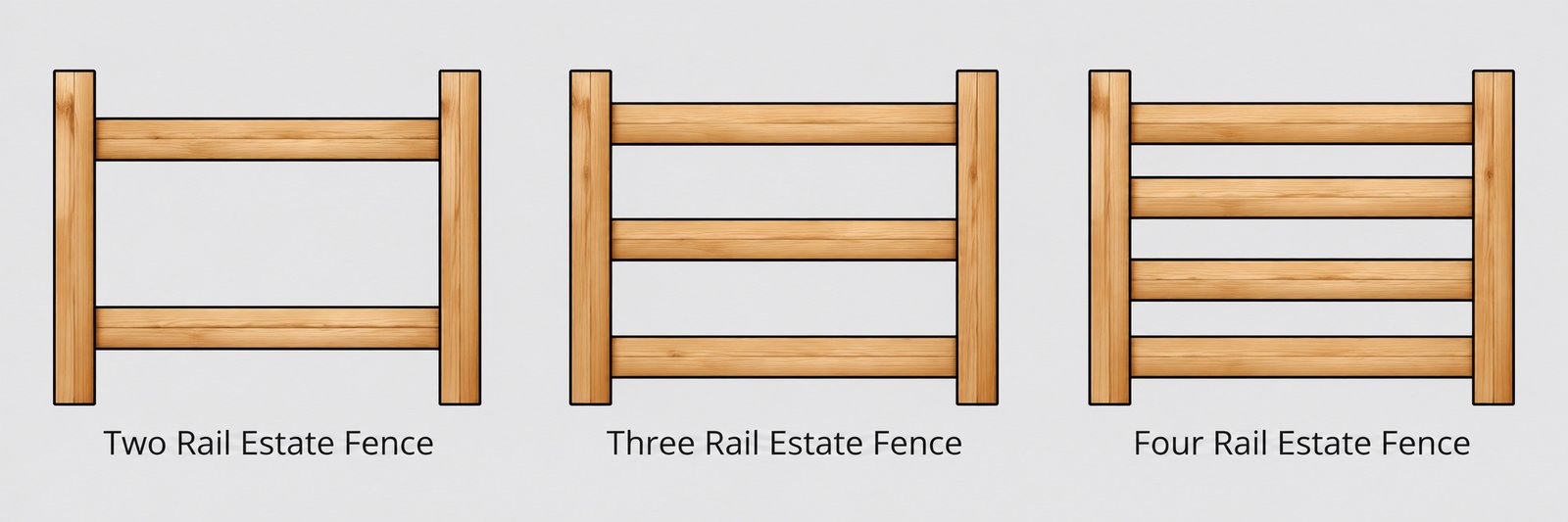
- Two Rail: the most open and minimal look.
- Three Rail: a balance of openness and structure, and a classic ranch look.
- Four Rail: the most substantial, with rails closer together.
Estate rail fences don’t keep small pets in on their own, but wire mesh can be added behind the rails if needed.
Fence Material Options
Style is only half the decision. The material affects cost, maintenance, and how the fence holds up to Texas sun, wind, and hail.
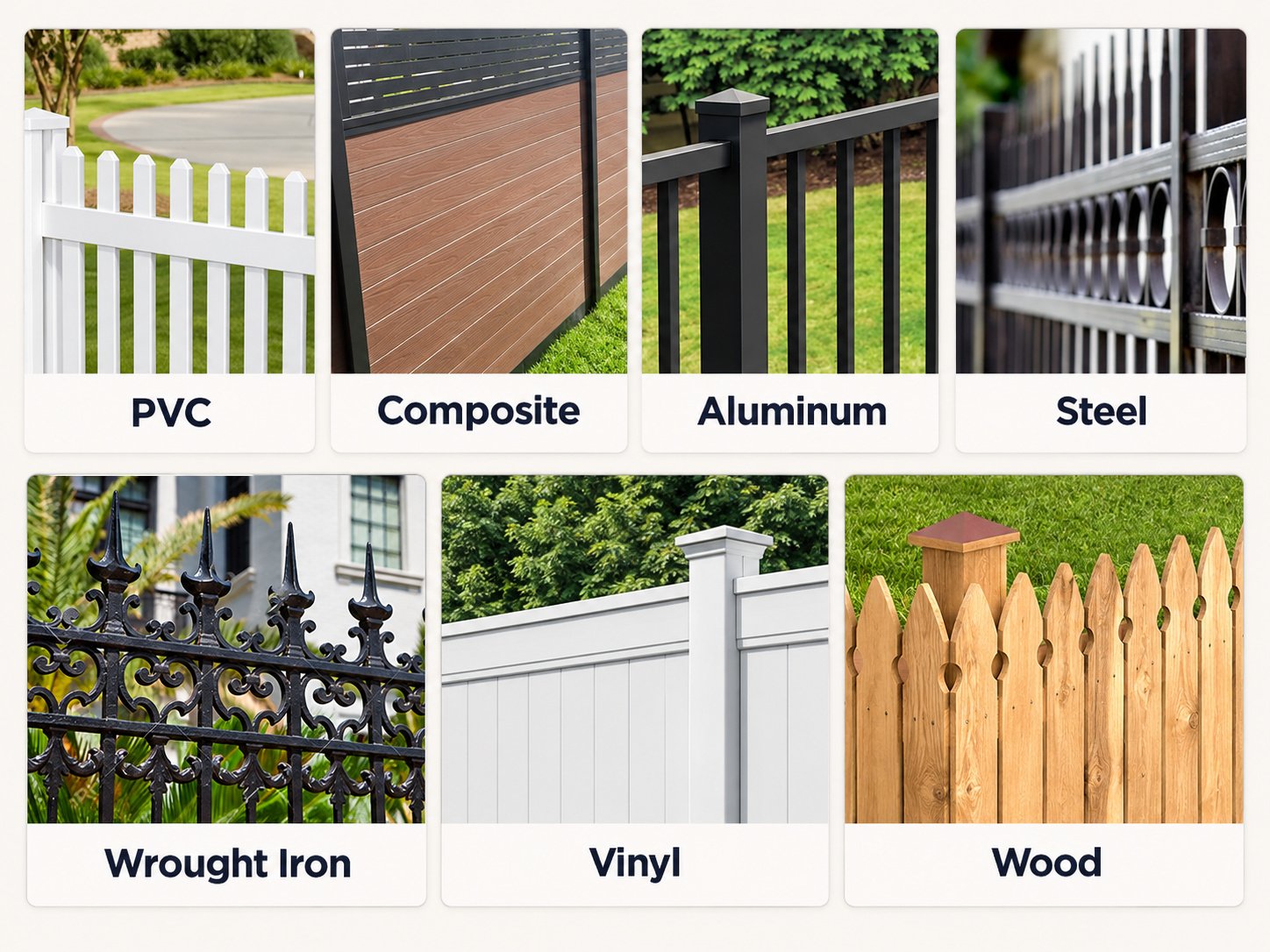
- Wood: the most popular choice in North Texas, usually cedar, which naturally resists rot and insects and takes stain well. It looks great but needs periodic staining or sealing to stay that way.
- PVC: a durable plastic that never needs painting or staining and won’t rot or attract insects. PVC is especially common for classic white picket fences and decorative front-yard styles.
- Vinyl: made from PVC, so the two are close relatives, and you’ll often hear the terms used interchangeably. “Vinyl” usually refers to finished fence systems built from it, like the solid white privacy panels popular in backyards. Quality varies: thicker walls and better UV protection hold up longer in the Texas sun. Both PVC and vinyl cost more up front than wood, and in hail country it’s worth knowing they can crack or chip from impacts.
- Composite: made from wood fibers and plastic. Consistent color, no staining, and little maintenance, at a higher price than wood.
- Aluminum: lightweight, rust-proof, and low maintenance. A common choice for an ornamental look around pools and front yards.
- Steel: stronger than aluminum and typically powder-coated. Often used for ornamental fencing and for framing modern wood fences.
- Wrought Iron: the traditional ornate, heavy look. Most “wrought iron” fences today are actually steel made to look the part, and either way, iron needs rust care over time.
A note on posts: much of North Texas sits on expansive clay soil that swells when wet and shrinks when dry. That movement works on fence posts year-round, and wood posts tend to rot right at ground level. That’s why many homeowners in Plano choose galvanized steel posts, even for a fence that looks all wood. They cost more up front but hold up better in shifting soil.
Don’t Forget the Gate
Gates take more wear than any other part of a fence, so they need solid posts and hardware. For driveways, an automatic sliding or swinging gate means you don’t have to get out of the car to open it, which is especially nice on rainy days. A matching walk gate is a convenient addition for foot traffic.
How to Choose the Right Fence Style
- How much privacy do you want? Solid board and board-on-board give the most. Shadowbox and horizontal styles with small gaps give a little less. Picket, estate rail, and ornamental metal give little or none.
- What look fits your home? Traditional homes often suit dog ear, gothic, or framed wood styles. Modern homes often suit horizontal or steel-framed designs.
- How much maintenance are you up for? Wood looks best with periodic staining. Vinyl, composite, aluminum, and steel need less.
- What’s your budget? Simple solid board picket fences sit at the lower end. Board-on-board, framed, horizontal steel-framed, and automatic gates cost more.
- What do your HOA and city allow? In Plano, new fences generally need a city permit, front-yard fences have stricter height and openness rules, and many neighborhoods have HOA requirements. Check before you settle on a style.
Thinking About a New Fence?
Every yard is different, and the right fence depends on how you use the space. Concord Roofing & Construction builds and replaces fences across Plano and nearby communities like Frisco, from classic wood privacy fences to custom steel-framed designs with automatic gates. We’ll walk through the options with you, with no pressure.