
A denial letter feels like the end of the road, but it usually isn’t. Many roof claims that are denied, or paid far below the cost of repairs, can be reviewed, appealed, or settled another way. The right next step depends on why the insurance company said no.
This guide walks through the options in the order most homeowners should try them, from the simplest to the most involved. It’s general information for North Texas homeowners, not legal or insurance advice, and your own policy and the Texas Department of Insurance (TDI) have the final word on the details.
The Path at a Glance
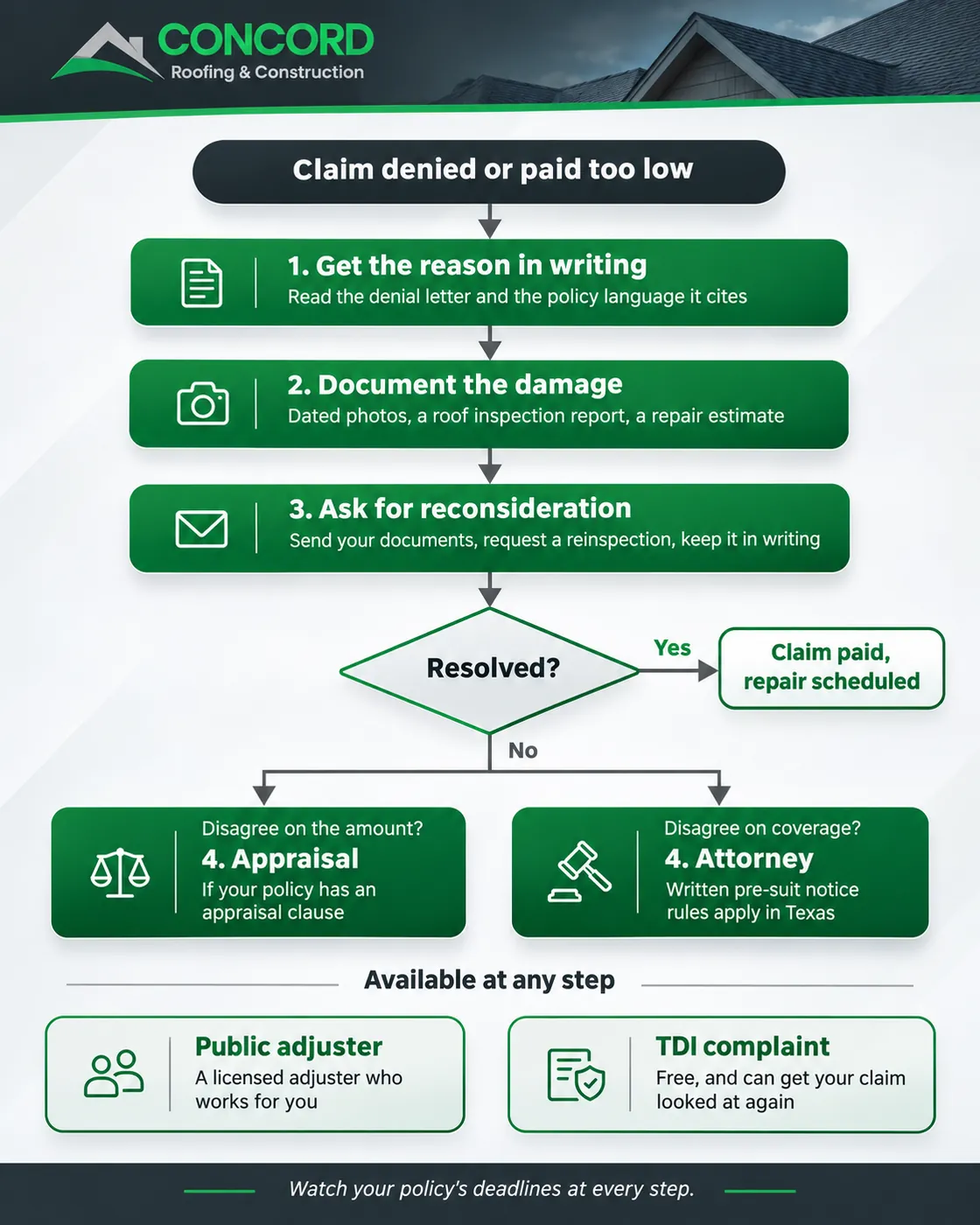
1. Find Out What “No” Actually Means
Not every “no” is the same, and the kind you got changes your next move. Most fall into one of these:
- A full denial. The insurer says the damage isn’t covered or isn’t from the storm.
- A partial approval. Some items are covered and others aren’t, or a repair is approved but not a full replacement.
- A low estimate. The claim is accepted, but the amount is far below what a contractor says the work will cost.
- Damage below your deductible. The insurer agrees there is damage but says it costs less than your deductible to fix. Wind and hail deductibles in Texas are often a percentage of the home’s insured value, so this comes up more than people expect.
The reasons given are usually short phrases like “wear and tear,” “pre-existing damage,” “no hail hits found,” or “cosmetic damage.” That last one refers to an exclusion some policies have for dents and surface marks that don’t affect how a roof works, most often on metal roofs (our standing seam metal roof guide touches on it).
Whatever the reason, ask for the decision and the reasons in writing, then read the part of the policy they cite. You can’t answer a denial you haven’t read.
2. Document the Damage
Claims are decided on evidence, and a thorough record is the strongest thing you can bring to a second look. Gather:
- Dated photos of every slope, close up and from a distance, plus damage to gutters, vents, flashing, and siding.
- A roof inspection report with a photo log from a qualified roofer, showing what was found and where.
- An itemized repair estimate that explains the scope of the work.
- Storm details, such as the date and any local weather reports, plus any before-the-storm photos you have.
- Interior evidence, like water stains or drips, with dates.
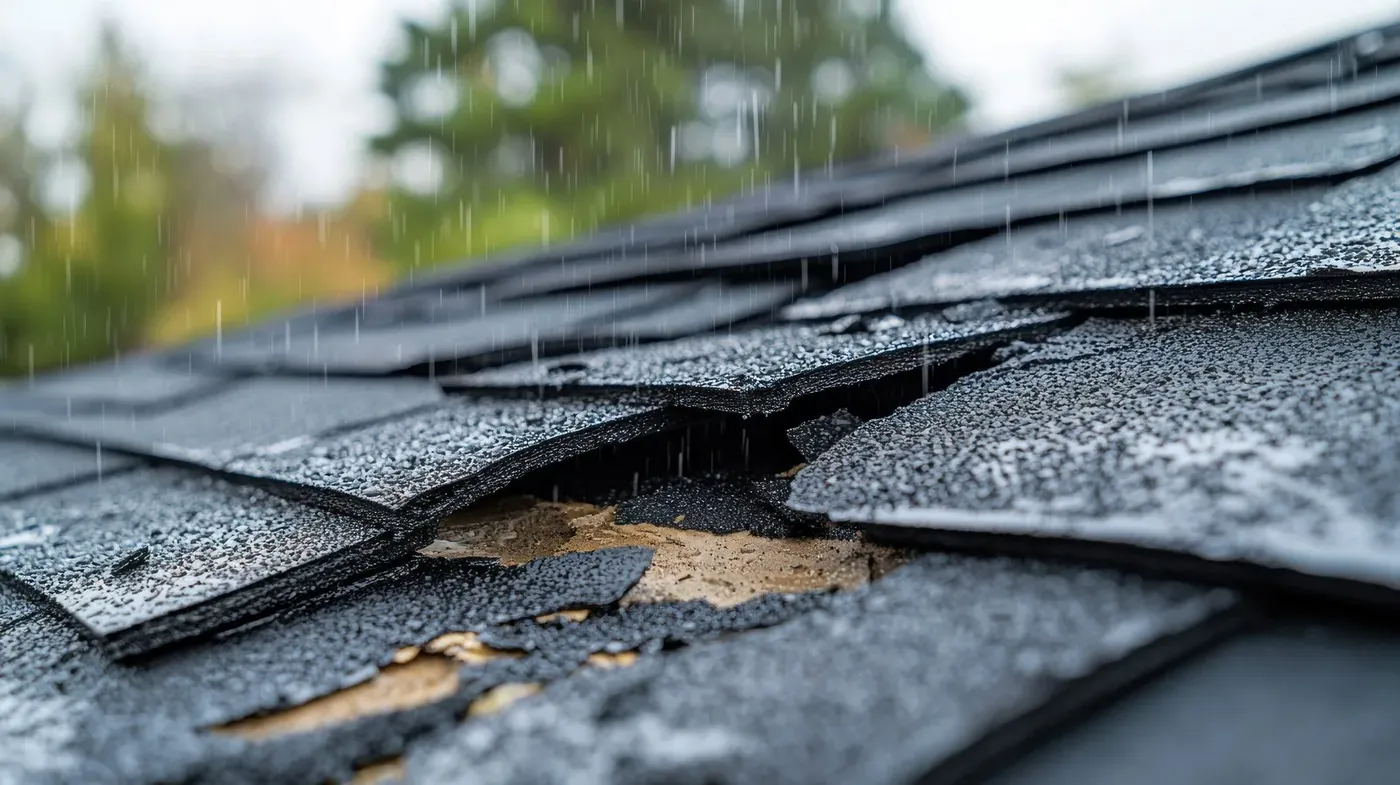
Please don’t climb onto the roof yourself. Photograph from the ground or a ladder, and leave the roof to a professional. A roof inspection from a roofer who documents what they find is built for exactly this situation.
3. Ask for Reconsideration
Before anything formal, ask the insurer to look again. Send your documentation in writing, ask for a reinspection, and ask them to point out which specific items they disagree with and why. You can also ask for a different adjuster. If your roofer can be at the reinspection, they can show the adjuster exactly what they found.
Keep a simple log of every call and email: the date, who you spoke with, and the claim number. A polite, well-documented request resolves many disputes without going any further.
4. Appraisal: When You Disagree on the Amount
Most Texas homeowner policies include an appraisal clause. Each side picks an appraiser, the two appraisers choose an umpire, and together they decide what the loss is worth. A few things to know:
- It settles the amount, not coverage. Appraisal can resolve “this repair costs $X, not $Y.” It doesn’t decide whether the damage is covered in the first place.
- The result is generally binding. Think it through before you start.
- It has costs. Each side usually pays its own appraiser and shares the cost of the umpire.
- Policies differ. Read your clause for how to start the process and any deadlines.
Your roofer’s inspection report and estimate are often what an appraiser works from, which is one more reason to document well.
5. A Public Adjuster
A public adjuster is licensed by the state and works for you, not the insurance company. They review the policy and the damage, build the claim, and negotiate with the insurer. They typically charge a percentage of the settlement, and Texas regulates their licensing and contracts.
A public adjuster can help on large or complicated claims, or when you don’t have the time to manage the process yourself. Get a written contract, understand the fee before you sign, and confirm the license with TDI.
6. An Attorney
If the dispute is about coverage, or you believe the insurer isn’t handling your claim fairly or on time, an attorney who handles property insurance claims can review your policy and your file. Texas has prompt-payment rules that set deadlines for insurers, and before suing over a property claim, a homeowner generally has to give the insurer written notice roughly two months ahead. Because of those rules, it’s better to talk to an attorney early than at the last minute. Ask how fees work before you sign anything.
7. File a Complaint With the Texas Department of Insurance
TDI regulates insurance companies in Texas, and a complaint to TDI is free. TDI can’t order an insurer to pay a specific amount, but the insurer has to respond, and a complaint often gets a claim looked at again. It’s a low-cost step worth taking if reconsideration goes nowhere.
Watch the Deadlines
Your policy and Texas law set time limits on reporting a claim, disputing it, and filing a lawsuit. Many Texas policies require wind and hail claims to be filed within a set period after the storm, often a year, and the time limit to sue is separate. Starting a complaint or an appraisal doesn’t always pause those clocks. Read your policy for the exact dates, and ask the insurer to confirm any deadline in writing.
Protect the Home While You Sort It Out
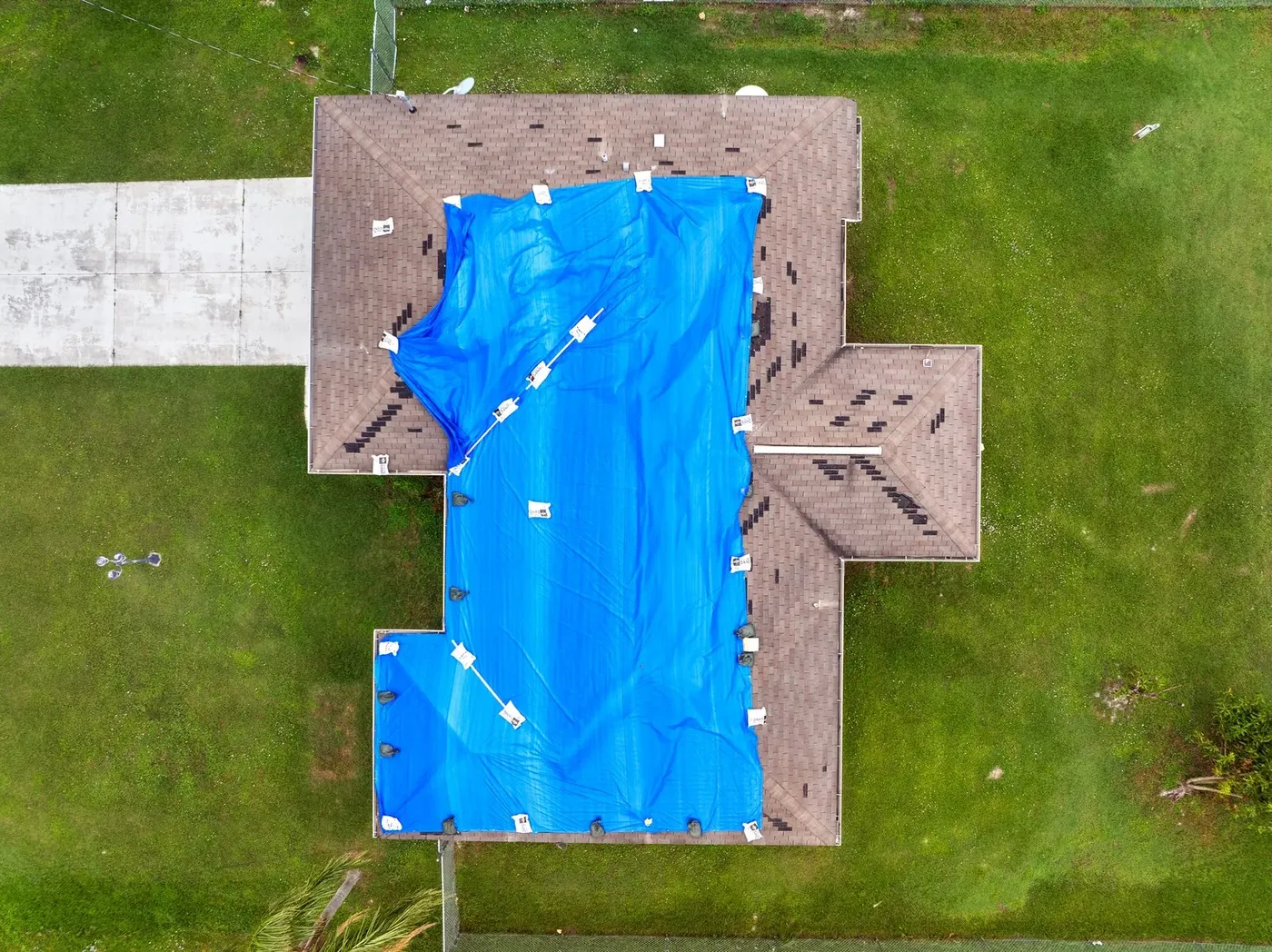
Most policies expect you to take reasonable steps to prevent further damage, even while a claim is in dispute. If water is getting in, a temporary repair like a tarp can protect the home. Keep the receipts, take photos before and after, and don’t throw away damaged materials until the damage has been documented. If the roof is actively leaking, protect it first and argue about the claim second.
Where a Roofer Fits, and Where We Don’t
A roofing contractor can inspect the roof, document the damage, write a detailed estimate, explain what we found in plain language, and, if you ask, show the adjuster what we found during a reinspection. That documentation is often the difference between a claim that stalls and one that moves.
There are also things a contractor should not do:
- Act as your public adjuster or negotiate the claim for you. In Texas that is a licensed profession, and roofers aren’t allowed to do it.
- Promise your claim will be approved. Only the insurer decides that, and nobody honest can guarantee it.
- Waive or pay your deductible. Texas law doesn’t allow it. Be cautious of anyone who offers.
If the Claim Stays Denied
Sometimes, after all of this, the answer is still no. That doesn’t mean the roof stops needing attention. A few practical paths:
- Fix what’s urgent first. A targeted roof repair can stop a leak and buy time.
- Get an honest scope. Ask what the roof actually needs now and what can wait, so you can plan and stage the work.
- Ask about payment options. Contractors handle this differently, so ask early.
- Keep your documentation. It’s useful for a future claim, a home sale, or if the insurer reopens the file.
Need a Second Set of Eyes on Your Roof?
If you’re dealing with a denied or underpaid claim, a thorough inspection is the best place to start. Concord Roofing & Construction handles roof inspections, hail and wind damage repair, and roof replacement across Plano and nearby communities, and our storm restoration work includes the documentation a claim depends on. To talk it through, contact us or call (214) 299-6110.