
If you’ve driven past a home or business with long, clean metal panels running from the peak of the roof down to the edge, separated by thin raised ribs, you’ve seen a standing seam metal roof. They’re showing up on more buildings across North Texas, and for good reason. But they aren’t the right fit for every home or every budget, so let’s walk through how they work, what they do well, and where they fall short.
What Is a Standing Seam Metal Roof?
The name comes from the seam itself. Each panel has a wide, flat center (called the pan) with its edges turned up. Where two panels meet, those raised edges lock together into a rib that stands about 1 to 2 inches above the roof. Rain runs down the flat pans, and the joint between panels sits up on top of the rib, above where the water flows.
The panels usually run in one piece from the eave to the ridge, so there are no overlapping joints across the slope for water to work its way into. That design, plus the way the panels are fastened, is what sets standing seam apart from other metal roofs.
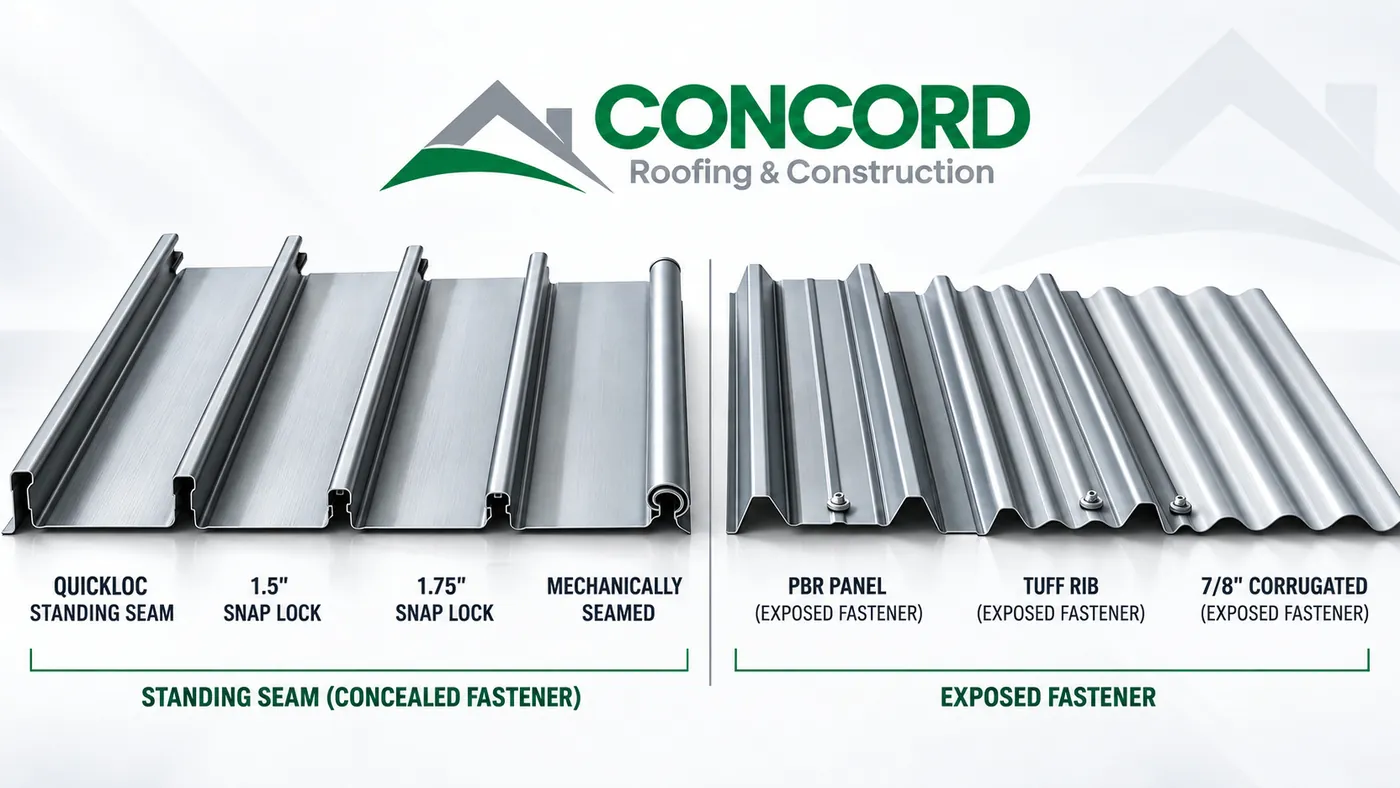
There are a few common types of standing seam panels:
- Snap-lock: the edges of the panels simply snap together. It’s quick to install and popular on homes with a moderate to steep roof slope.
- Mechanically seamed: after the panels are set, a seaming tool folds the edges over one another into a tight lock. It’s the strongest seam, and it’s used on lower slopes and where the highest wind ratings are needed.
- Nail flange (fastener flange): one edge of each panel has a slotted strip that screws straight to the deck, and the next panel covers it. It’s a more budget-friendly option, often used on smaller roofs.
Compare that to an exposed-fastener metal roof, the ribbed or corrugated panels you see on barns, shops, and carports. Those panels are screwed straight through their face, and each screw relies on a rubber washer to keep water out. Over years of Texas sun, those washers dry out and crack, and every screw becomes a possible leak.
How the Panels Are Held Down
If no screws go through the panels, what keeps them on the roof? On snap-lock and mechanically seamed panels, the answer is hidden clips. Each clip is a small metal bracket screwed to the roof deck, with a tab that stands up along the edge of a panel. When the next panel goes on and the seam is closed, that tab gets locked inside the seam, completely out of sight.
Clips go along every seam, closer together near the edges and corners of the roof, where wind pulls hardest. The spacing isn’t guesswork. It comes from wind testing, and the Texas Department of Insurance publishes product evaluations for standing seam systems that spell out the clip spacing needed for different wind loads.
The clips also solve another problem: metal expands in the heat and shrinks when it cools, and a long panel can move a noticeable amount between a cold night and a July afternoon. Clips hold the panels down tight against wind while still letting them slide lengthwise as they grow and shrink, so the metal doesn’t buckle or tear itself loose.
The Pros of a Standing Seam Metal Roof
- Fewer places to leak: no screws through the panels, no rubber washers to wear out, and no overlapping joints across the slope.
- A long life: a well-installed standing seam roof can last decades longer than a typical asphalt shingle roof, which can mean one roof instead of two or three over the time you own your home.
- Wind resistance: long, interlocked panels held down by tested clip patterns hold up well in the high winds that come with North Texas storms.
- Hail resistance: many standing seam panels carry a UL 2218 Class 4 impact rating, the same top rating used for impact-resistant shingles.
- Heat reflection: metal with a light-colored or reflective “cool roof” finish reflects more of the sun’s heat than dark shingles do, which can help keep the attic cooler through a Texas summer.
- Fire resistance: metal doesn’t burn, and metal roof systems commonly carry a Class A fire rating, the highest available.
- Low maintenance: no granules to shed and no shingles to blow off. An occasional inspection of the flashing and trim is usually all it needs.
- Recyclable: metal panels can be recycled at the end of their life instead of going to a landfill.
- Curb appeal: the clean lines work on modern farmhouses, traditional homes, and commercial buildings alike, in a wide range of colors.
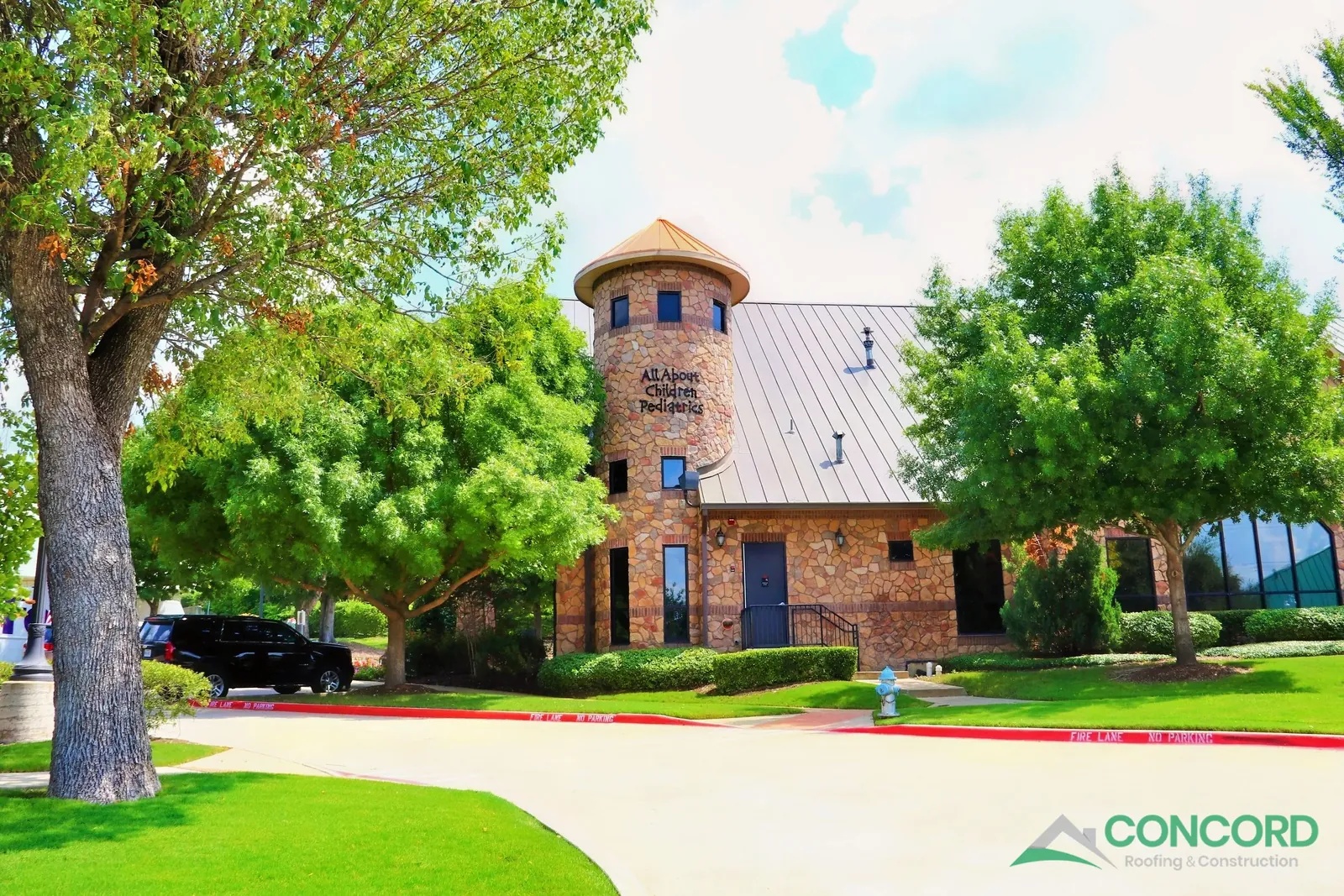
For a real-world example, here’s a standing seam roof from our McKinney metal roof replacement, where we replaced a storm-damaged roof on a pediatric clinic and used an accent color on the turrets and eave.
The Cons to Consider
- Upfront cost: a standing seam roof costs considerably more to install than asphalt shingles. Its long life can make up the difference over time, but only if you’re in the home long enough to see it.
- Dents from large hail: a Class 4 rating means the panel resists cracking and leaks, not that it can’t dent. Large hail can still leave cosmetic dents, and that has insurance implications (more on that below).
- Oil canning: wide, flat panels can show a slight waviness in certain light. It doesn’t affect performance, but some people notice it. Panel width, metal thickness, and small stiffening ribs in the pan help reduce it.
- Skilled installation required: flashing, trim, and clip layout all matter, and mistakes are harder to fix than on a shingle roof. Repairs can also be more involved, and matching the color on a single replacement panel years later can be tricky.
- Expansion sounds: as the metal heats and cools, you may occasionally hear a light tick or pop, usually in the morning or evening.
- Changes take planning: adding a vent, skylight, or solar mounts later is very doable, but it takes more care than cutting into a shingle roof.
Are Metal Roofs Loud in the Rain?
This is one of the most common questions, and the answer is usually no. The loud “rain on a tin roof” sound comes from metal screwed onto open framing, like a barn or carport, with nothing underneath to absorb the sound. On a home, a standing seam roof goes over solid roof decking and underlayment, with an insulated attic below. Those layers soak up most of the noise, so most homeowners find a metal roof only a little louder than shingles in a heavy storm.
What Goes Underneath: Underlayment
The underlayment is the protective layer between the roof deck and the metal panels, and it matters even more under metal than under shingles. Metal panels get very hot in the sun, so the underlayment needs to be rated to handle high temperatures without softening or sticking to the panels. Most metal roofs today use a synthetic underlayment, a tough, lightweight sheet that resists tearing and keeps the deck dry.
Extra ice and water protection is also important at the spots where water is most likely to find its way in, like valleys, roof edges, and around chimneys and vents. Ask your roofer what underlayment they plan to use and why. It’s a part of the roof you’ll never see once the job is done, but it does a lot of the work.
Specialty Metals: Copper and Its Natural Patina
Most standing seam roofs are made of painted steel or aluminum, but the same style of roof is also available in specialty metals like copper. Copper has been used on roofs for centuries, and it’s one of the few roofing materials that changes color on its own as it ages.
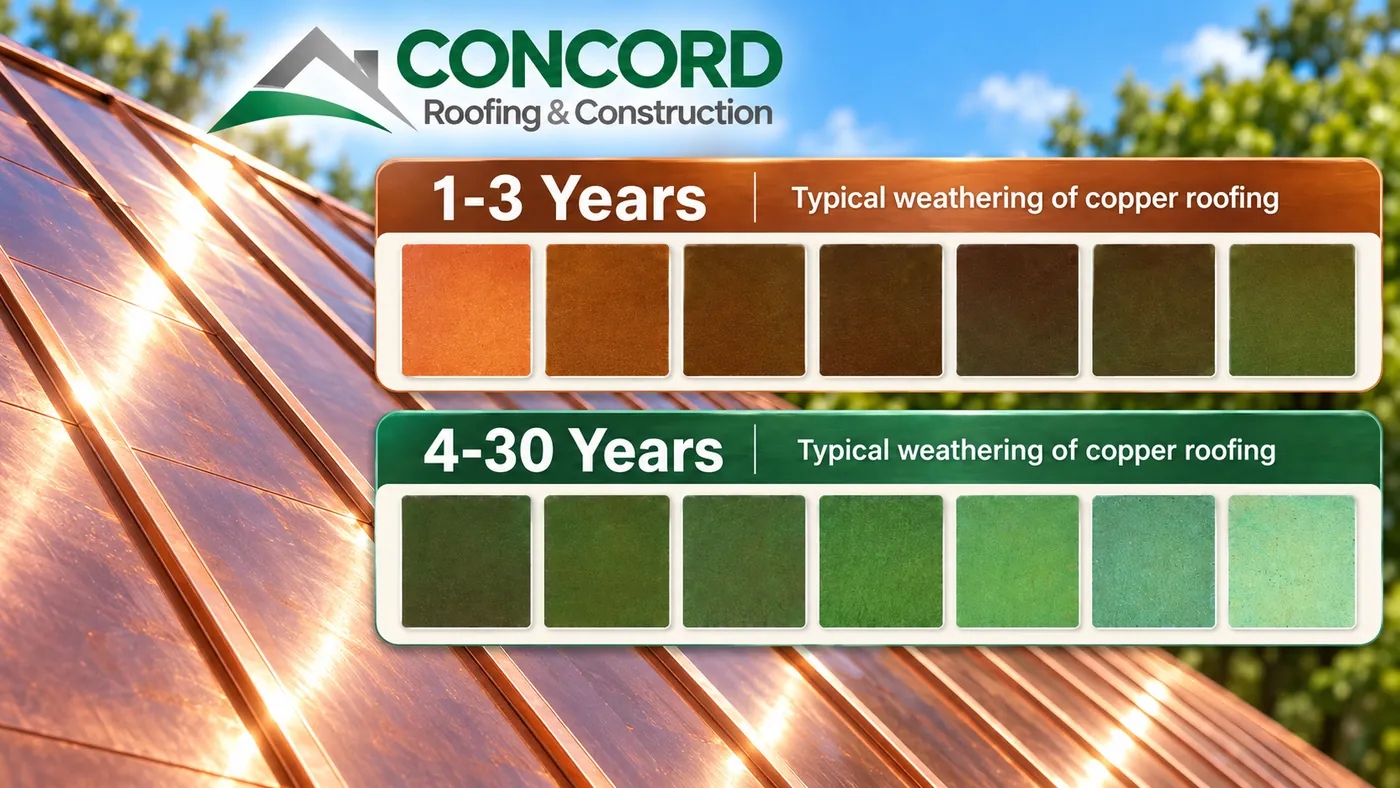
A new copper roof starts out a bright, shiny copper color. Exposed to air and moisture, it darkens to brown within the first few years and keeps deepening from there. Over many more years, a green layer called a patina forms on the surface. That patina isn’t damage. It’s a natural, stable layer that protects the copper underneath from further corrosion, which is a big part of why copper roofs can last for generations. Many homeowners choose copper specifically for that one-of-a-kind look as it ages.
A few things to know about copper:
- The timeline varies: moisture drives the patina process, so it moves fastest in humid, coastal, or industrial areas. In a drier inland climate like much of North Texas, the full green color can take decades to develop.
- It’s a premium material: copper costs considerably more than painted steel. Because of that, many homeowners use it as an accent on a bay window, entry roof, turret, or porch, rather than covering the whole roof.
- Runoff can stain: water running off copper can leave green or blue-green stains on light-colored stone, brick, or concrete below, so drainage should be planned with that in mind.
- Keep it away from other metals: copper can corrode metals like aluminum and galvanized steel where they touch or where copper runoff drains onto them, so gutters, flashing, and fasteners need to be compatible.
Insurance: The Cosmetic Damage Question
Many Texas insurance companies offer a premium discount for roofs with a UL 2218 Class 4 impact rating, and many standing seam panels carry that rating. But there’s a catch worth knowing about. Back in 1998, the Texas Department of Insurance approved an optional endorsement that lets insurers exclude cosmetic hail damage on roofs that receive that discount, and many Texas policies today include some form of cosmetic damage exclusion for metal roofs.
In practice, that can mean hail dents that don’t cause a leak or affect how the roof works may not be covered. Policies vary a lot, so before you choose a metal roof, ask your insurance agent whether a discount is available and how your policy handles cosmetic damage to metal.
Is a Standing Seam Roof Right for You?
- How long will you stay in the home? The longer you plan to stay, the more a long-lasting roof pays for itself.
- What’s your budget? Expect a higher upfront cost than shingles, and a much higher one for copper.
- What does your roof look like? Standing seam works on a wide range of slopes, including lower slopes where shingles aren’t an option. Very complex roofs with lots of valleys and angles add labor and cost.
- What does your HOA allow? Check your HOA’s guidelines for roofing materials and colors before you settle on a style.
- What does your insurance policy say? Ask about Class 4 discounts and cosmetic damage exclusions up front.
Thinking About a Metal Roof?
Concord Roofing & Construction installs and repairs metal roofs for homes and commercial buildings across Plano and nearby communities like McKinney. If you’re weighing metal against shingles, we’ll start with a roof inspection and give you an honest comparison of the options for your home and budget.